


Most small businesses aren’t held back by a lack of opportunity – they’re held back by outdated strategies.
From leveraging AI to building stronger client relationships and measuring what actually drives revenue, these five practical growth strategies can help CEOs scale smarter, compete harder and future-proof their business.
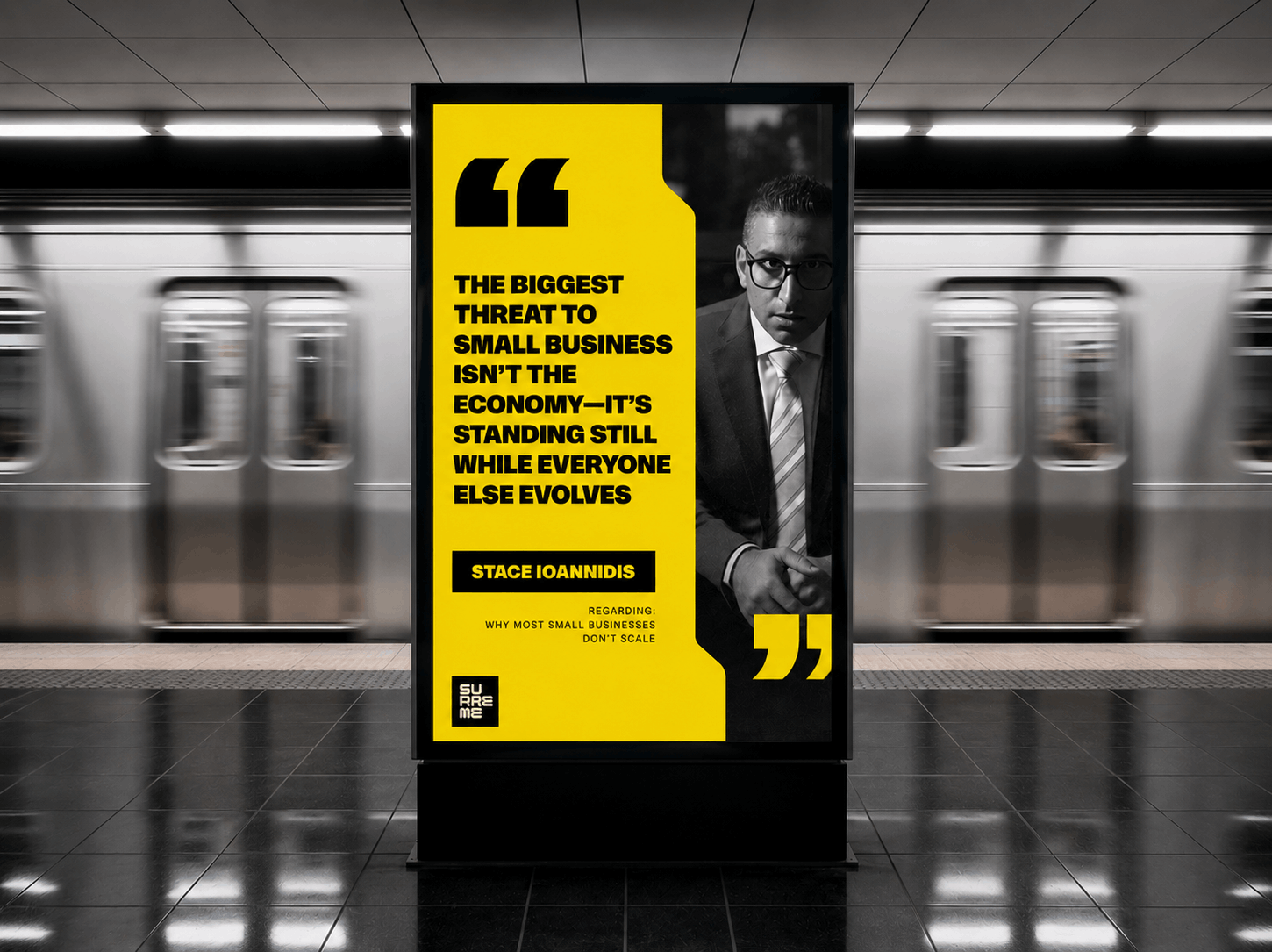
“The biggest threat to small business isn’t the economy- it’s standing still while everyone else evolves.”
Here are the five growth strategies every CEO should be implementing in 2026.
Growth isn’t accidental. It comes from making disciplined decisions, investing in the right capabilities and building systems that create predictable outcomes.
As a CEO, I’ve learned that the businesses that outperform their competitors aren’t always the biggest—they’re often the most focused. They understand their market, adapt quickly and invest in initiatives that deliver measurable outcomes rather than short-term wins.
1. Build Relationships, Not Just Pipelines
B2B is built on trust. Every client should be viewed as a long-term partner rather than a one-off transaction. Strong relationships generate repeat business, referrals and a significantly higher customer lifetime value.
As management expert Peter Drucker famously said:
“The purpose of business is to create and keep a customer.”
Spend time understanding your clients’ commercial objectives, communicate consistently and become a trusted adviser rather than simply another supplier.
Businesses that genuinely solve problems will always outperform those that simply sell products or services.
2. Use AI to Increase Productivity, Not Replace People
Artificial intelligence has become one of the greatest opportunities available to small businesses. What was once reserved for enterprise organisations is now accessible to businesses of every size.
The biggest misconception is that AI replaces people.
It doesn’t. It empowers them.
Whether it’s automating administration, drafting proposals, analysing customer data, improving marketing campaigns or enhancing customer service, AI allows small teams to operate with the efficiency of much larger organisations.
Microsoft CEO Satya Nadella summed it up:
“AI is perhaps the most transformative technology of our time.”
The organisations that embrace AI today won’t replace their workforce—they’ll give their people more time to focus on creativity, relationships and strategic thinking.
3. Become Known for Something Specific
One of the biggest mistakes small businesses make is trying to be everything to everyone.
Generalists compete on price. Specialists compete on expertise.
The fastest-growing businesses often dominate a niche before expanding into adjacent markets.
Whether your focus is construction, healthcare, manufacturing, technology or professional services, own your category.
When people immediately associate your business with solving a particular problem, marketing becomes easier, referrals increase and sales cycles become shorter.
Being memorable is far more valuable than being broad.
4. Measure Revenue, Not Vanity Metrics
Likes, impressions and website traffic can be useful indicators, but they don’t necessarily translate into commercial success.
Every marketing activity should ultimately answer one question:
Did it generate revenue?
Track the metrics that matter:
- Qualified leads
- Customer acquisition cost
- Conversion rates
- Customer lifetime value
- Return on marketing investment
Legendary investor Warren Buffett once said:
“Price is what you pay. Value is what you get.”
The same philosophy applies to marketing.
Focus less on activity and more on outcomes. Businesses that make decisions based on commercial data consistently outperform those driven by assumptions.
5. Invest in Your Brand Before You Need It
Many organisations only think about branding when sales begin to slow.
By then, they’re already reacting instead of leading.
Your brand is far more than a logo. It’s your reputation, positioning, messaging, website, customer experience and thought leadership.
Every interaction either builds trust or erodes it.
A strong brand creates credibility before the first meeting, reduces friction during the sales process and allows businesses to compete on value instead of price.
The strongest brands aren’t necessarily the loudest—they’re the most consistent.
Final Thoughts
Small businesses don’t need enterprise-sized budgets to achieve significant growth. They need clarity, discipline and the willingness to adapt.
Technology, particularly AI, is reshaping how businesses operate, but sustainable growth will always come from combining innovation with genuine relationships, specialist positioning, data-driven decision-making and a brand that inspires confidence.
The businesses that commit to these five strategies today won’t simply keep up with the market—they’ll be the ones shaping it tomorrow.
Start Your Project With Studio Supreme
Fill out the form below to start working with our studio team: